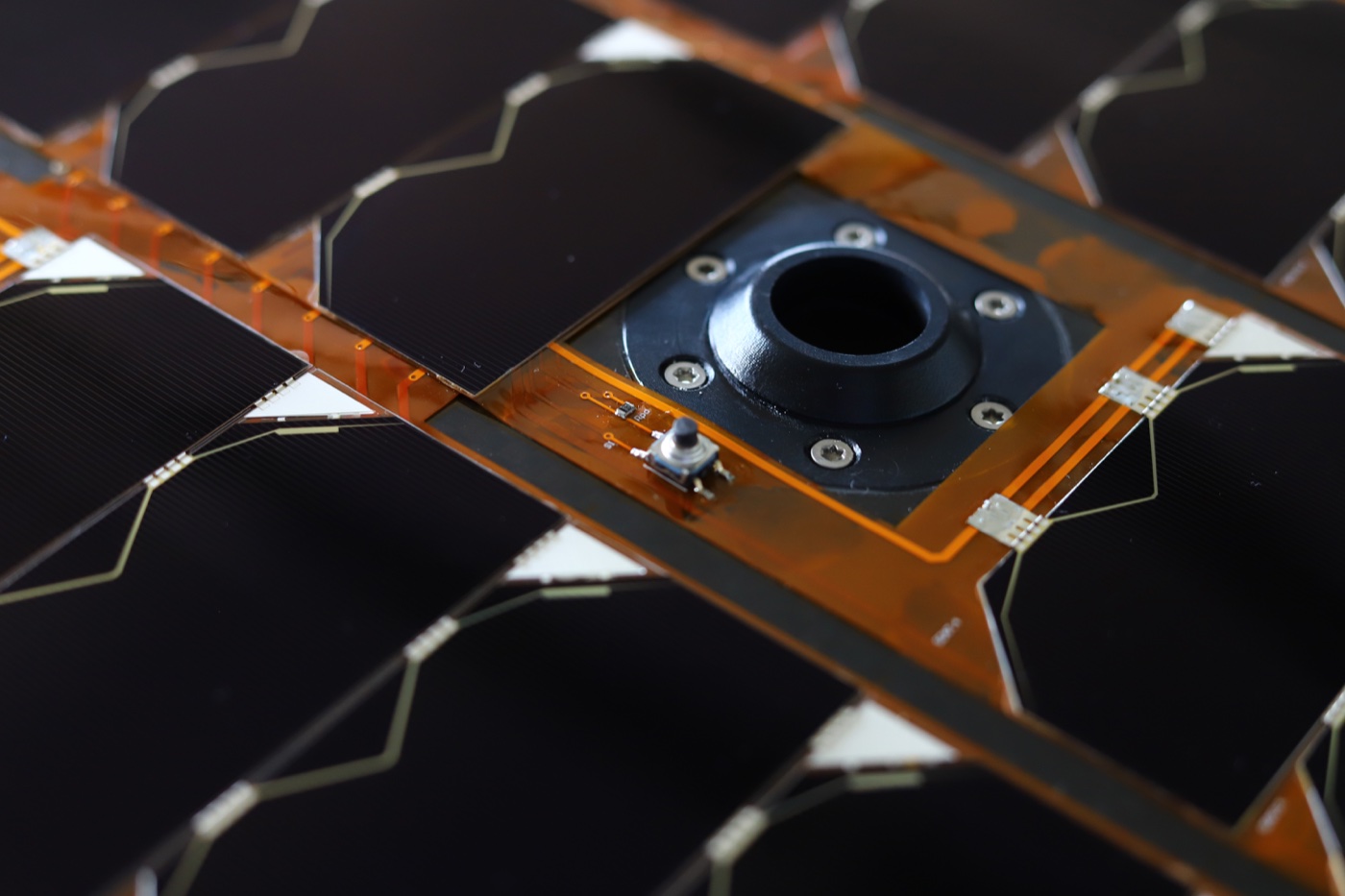
Independent shock testing of the uD3RN Micro Release Nut
01 · Challenge
Verifying the shock performance of the uD3RN
When Quartus Engineering needed actuator shock test data, it asked Dcubed for test units. For Dcubed, this was an opportunity to independently verify the shock performance of its uD3RN Micro Release Nut.
Quartus Engineering has the technical know-how and advanced measurement tools needed to thoroughly test the device.
The goal of the campaign was to evaluate the mechanical shock produced by the uD3RN during release events and determine its suitability for shock-sensitive missions and payloads, such as spacecraft carrying fragile optical systems, deployable structures or precision instruments. A secondary aim was to assess repeatability across multiple triggers under identical conditions.
A successful test would also further support Dcubed’s reputation as a component partner that can reliably deliver on ultra-low shock requirements. This is particularly important in the context of the “Test as you fly, fly as you test” protocol, which is now mandatory for spacecraft owners that want to fly on SpaceX rideshare missions.
02 · Solution
A flight-representative test campaign
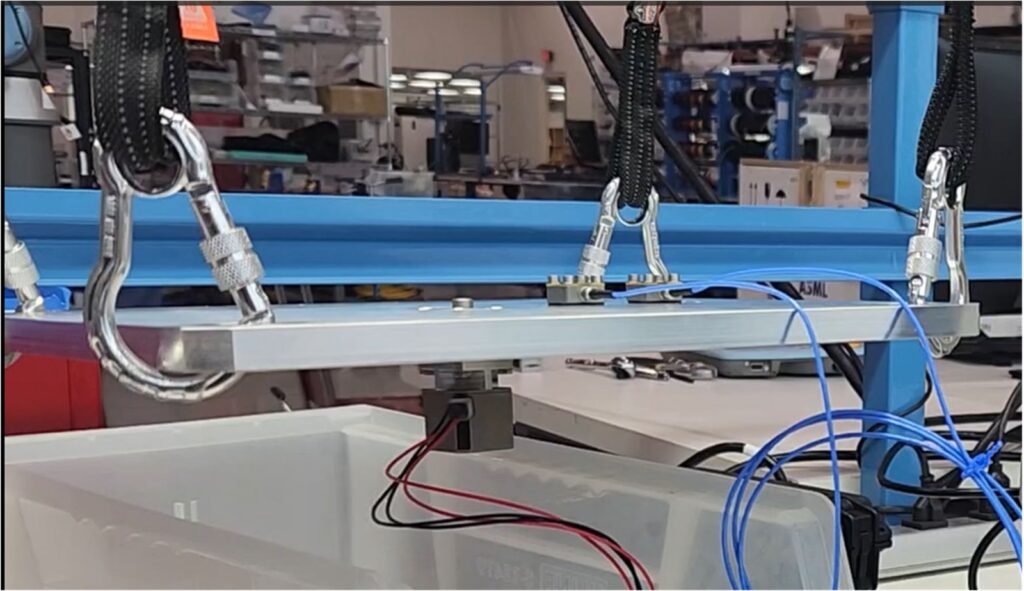
Quartus Engineering designed a custom test rig to simulate launch and deployment scenarios, using representative masses and mounting structures so that results closely mirror conditions in orbit. Over multiple test cycles, the uD3RN was actuated while high-speed sensors recorded the release event from initial trigger to full separation. The data allowed Quartus to construct a Shock Response Spectrum (SRS) for each actuation.
- Flight-representative interface with a 2 kN preload
- Data acquisition at 100,000 samples per second
- SRS constructed for every actuation
03 · Result
SRS levels no greater than 330 g from 10 Hz to 10 kHz
Across all trials, the uD3RN consistently delivered SRS levels no greater than 330 g over a bandwidth of 10 Hz to 10 kHz, and the shock output remained highly stable between triggers. This result refers to the optimized configuration tested by Quartus, which combined an elastomeric O-ring and a Belleville washer. The results are documented in the paper presented at the 34th Aerospace Testing Seminar.
This confirms the uD3RN as one of the lowest-shock release mechanisms currently available. The stable shock output between triggers demonstrates a level of reliability and repeatability critical for space missions.
Thanks to this independent validation, mission designers now have a proven, flight-ready and ultra-low shock solution for deploying critical hardware with minimal mechanical disturbance, reducing risk and expanding what’s possible in spacecraft design.
≤ 330 g
Shock Response Spectrum
10 Hz – 10 kHz, optimized configuration
Customer Voice
The exchange of information between Dcubed and Quartus enabled valuable physical insights critical to the success of this test campaign and the programs it supported. We look forward to building upon this successful work for future critical missions.

About the Customer
Quartus Engineering
Your Next Mission
Ready to build your next mission?
Tell us what you’re building and our engineering team will help you find the right solution.