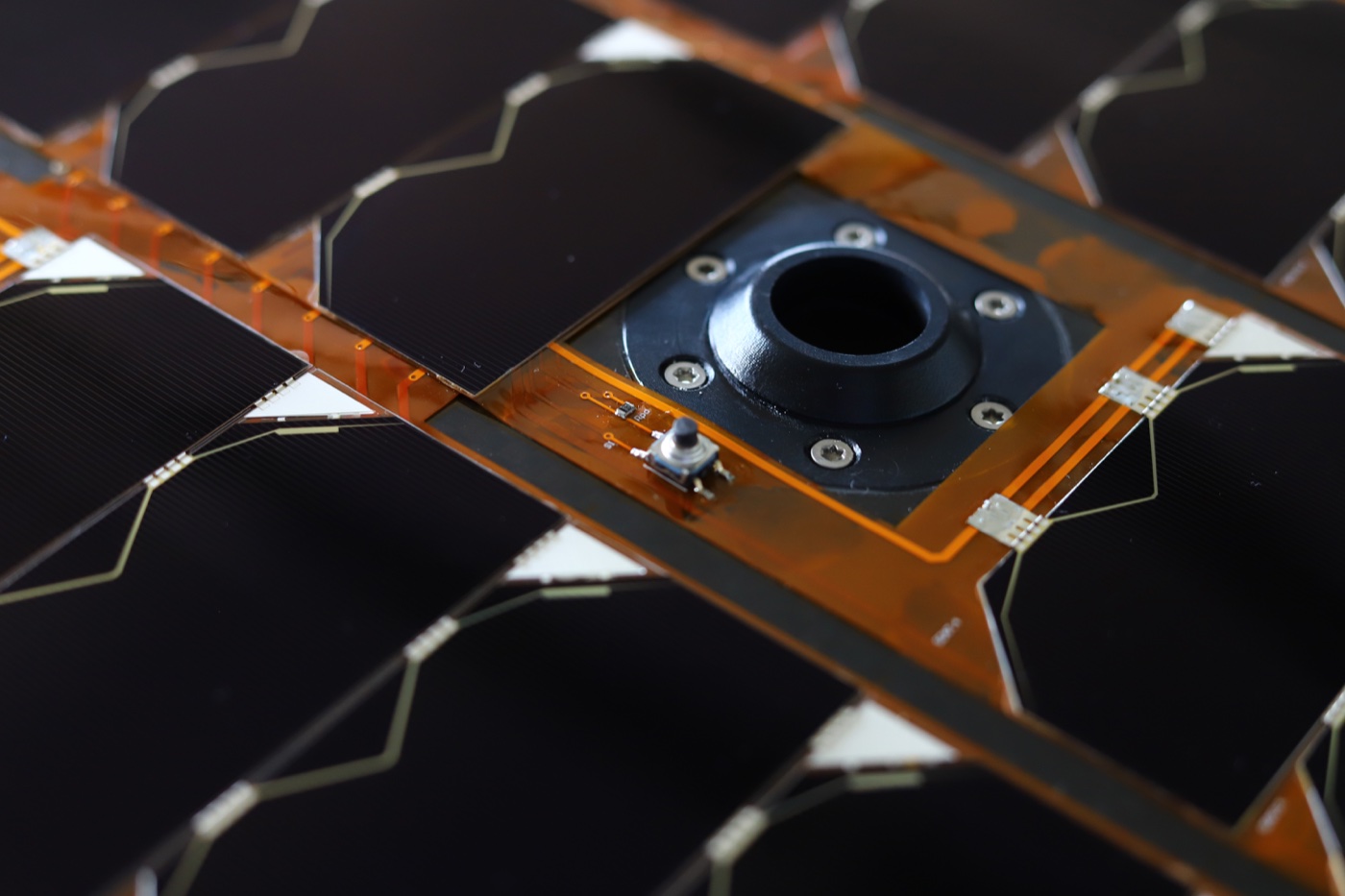
Resettable Nano Pin Pullers for the LizzieSat constellation
01 · Challenge
Single-use burn wire releases limited testability
As the LizzieSat platform evolved toward a scalable micro-constellation, Sidus Space needed to upgrade its solar array deployment architecture. Earlier missions relied on internally developed, single-use burn wire release systems. These worked, but they limited testability, slowed integration cycles and added risk as production volumes increased.
Sidus Space required a resettable, flight-proven solution that would accelerate testing, reduce integration risk and support aggressive delivery timelines across multiple spacecraft.
02 · Solution
Resettable Nano Pin Pullers replace burn wire systems
After evaluating several alternatives, Sidus Space selected Dcubed’s Nano Pin Pullers to deploy eight rigid solar arrays per LizzieSat spacecraft. Dcubed will supply 16 flight units for the next set of satellites, replacing burn wire systems with resettable Hold-Down and Release Mechanisms (HDRMs).
Dcubed’s Nano Pin Pullers offer proven flight heritage, scalability and rapid availability.
Engineering models have been delivered, with testing underway through Q4 2025 and flight unit delivery scheduled for December 2025.
- Eight rigid solar arrays deployed per LizzieSat spacecraft
- 16 flight units for the next set of satellites
- Resettable HDRMs instead of single-use burn wire systems
- Repeated test cycles without hardware replacement
03 · Result
Faster iteration and lower integration risk
By integrating Dcubed’s Nano Pin Pullers, Sidus Space improves its deployment architecture while reducing risk across satellite assembly and verification. Resettable release mechanisms enable faster iteration, more efficient testing campaigns and greater confidence ahead of launch, supporting Sidus Space’s ability to scale the LizzieSat micro-constellation.
Precision, reliability and schedule discipline are key factors as demand grows for faster and more flexible spacecraft production.
Customer Voice
Integrating Dcubed’s Nano Pin Pullers into our LizzieSat platform enhances our deployment architecture. Their resettable HDRMs enable rapid test cycles and reduce integration risk—capabilities that are critical as we scale our constellation under aggressive timelines.
 Carol CraigFounder & CEO · Sidus Space

About the Customer
Sidus Space
Your Next Mission
Ready to build your next mission?
Tell us what you’re building and our engineering team will help you find the right solution.